
The emergence of advanced generative AI has opened a new frontier for artists, especially in the world of portraiture. AI image generators, such as those based on diffusion models, have evolved beyond simple mimicry. They now offer a powerful toolkit to visually represent the complex spectrum of human emotion and physical detail. For creators aiming to produce authentic and evocative AI portraits, success lies in a thoughtful blend of technical prompting and creative vision.
The Language of Emotion: Prompting for Feeling
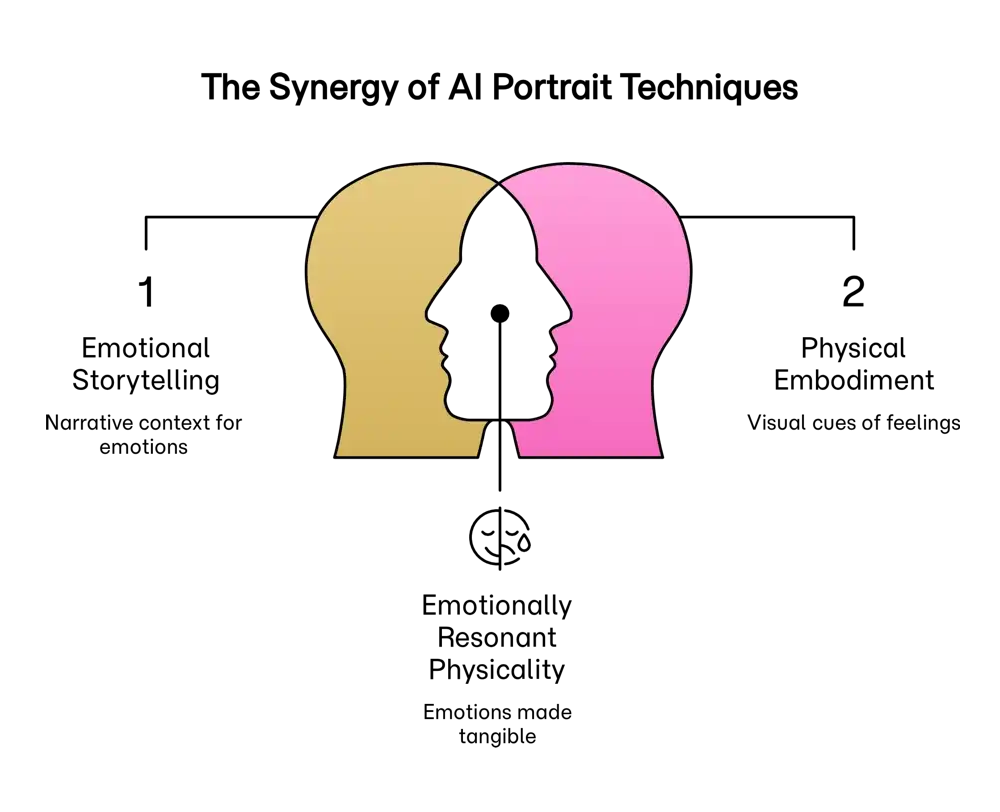
The foundation of a compelling AI portrait is the text prompt. This is where an artist's vision becomes an instruction for the AI. To create expressions that feel genuine, it's vital to use language that suggests emotion rather than just stating it. This practice, sometimes called emotional prompting, provides the AI with a narrative frame, allowing it to build an image rich with emotional subtext. For instance, instead of "a sad person," a more effective prompt would be, "a portrait of a person with the weight of a long day in their eyes, shoulders slightly slumped, a soft, melancholic light catching the rain on the windowpane behind them."
Using color theory and symbolic imagery in prompts can further deepen a portrait's emotional impact. Warm color palettes can evoke comfort and nostalgia, while cooler tones might create a sense of calm or melancholy. Abstracting personal experiences into colors and shapes can also lead to powerfully emotive and relatable images.
The Quest for Authenticity: Capturing Physical Nuance
An authentic AI portrait feels real because it captures the subtle details that define a person's physical presence. This is where a focus on realism is crucial. Instead of aiming for flawless perfection, artists should embrace and even prompt for the very imperfections that make us human. Mentioning "subtle skin texture," "stray hairs," or "the gentle crinkle of a smile" can guide the AI to produce images that are more lifelike. Lighting is also critical for authenticity. Experimenting with prompts that specify "soft, diffused morning light," "dramatic chiaroscuro," or "the warm glow of a single lamp" can dramatically alter the mood and realism of the portrait, sculpting the subject's features in a more believable way.
Beyond a Single Image: AI Portraits in Narrative
AI portraits can be powerful tools for storytelling, moving beyond a single image to create a narrative sequence. By generating a series of portraits of the same character, an artist can explore an emotional journey, showing subtle shifts in expression and body language over time. This is highly effective for character development in visual narratives like comics or storyboards. To maintain consistency, some AI models can be trained using reference images. This helps the AI learn a character's specific features, which can then be placed in different nostalgic scenarios or emotional states through new prompts. This technique is also valuable in business for creating consistent professional head shots.
The Artist as a Collaborator
Ultimately, creating emotionally authentic AI portraits is a collaborative process. The AI provides the tool for generation, but it is the artist's vision, understanding of human emotion, and skill in crafting evocative language that breathes life into the machine's creations. By embracing a more nuanced approach to prompt engineering and a willingness to experiment, creators can unlock the potential of AI to produce portraits that are not only visually stunning but also deeply and authentically human.
Ready to transform your AI into a genius, all for Free?
Create your prompt. Writing it in your voice and style.
Click the Prompt Rocket button.
Receive your Better Prompt in seconds.
Choose your favorite AI model and click to share.
Summary of Emotionally Authentic AI Portraits
To visually represent human emotion and physical detail in AI portraits, you must act as a creative director for the AI. The goal is to create an authentic image by guiding the model with rich, narrative-driven prompts. Instead of stating an emotion, describe its physical manifestations and surrounding context. This narrative framing provides clearer direction. Elements like lighting and composition are powerful tools to reinforce the mood, while detailed descriptions of physical features like skin texture and hair are crucial for authenticity. This deliberate approach transforms the AI from a simple generator into a partner in artistic storytelling.
Techniques for Emotional Expression
| Technique | Artistic & Narrative Purpose | How to Implement in AI Prompts |
|---|---|---|
| Emotional Storytelling | To ground the portrait in a specific, relatable moment, giving it a sense of history and interiority. | Start with a micro-narrative. For example: "A portrait of a woman moments after receiving unexpected news, her expression a mix of surprise and apprehension." |
| Physical Embodiment of Emotion | To translate abstract feelings into concrete, visible details that make the emotion feel authentic. | Describe the physical signs of an emotion, such as "eyes glistening with unshed tears," "a relaxed but heavy posture," or "lips slightly parted." |
| Gaze and Eye Direction | To create a powerful focal point for connection and hint at the subject’s internal thoughts. | Be precise about the eyes. Use phrases like "a direct, challenging gaze into the camera," "a distant, thousand-yard stare," or "eyes cast downwards in quiet reflection." Adding "catchlights in the eyes" adds life. |
Techniques for Realism and Authenticity
| Technique | Artistic & Narrative Purpose | How to Implement in AI Prompts |
|---|---|---|
| Atmospheric Lighting | To use light and shadow to establish mood, create drama, and guide the viewer's focus. | Specify the light source and quality. Use terms like "soft window light for a contemplative mood" or "dramatic Rembrandt lighting with deep shadows for intensity." |
| Detailed Physical Authenticity | To combat the "plastic" look of some AI generations and create a sense of realism and individuality. | Include specific textures and imperfections. For example: "photorealistic portrait with visible skin pores, fine lines around the eyes, and a few stray flyaway hairs." |
| Artistic and Stylistic References | To align the portrait's aesthetic with a specific mood, drawing on established visual languages. | Reference specific art movements, film genres, or photographers, such as "in the style of a Dutch Golden Age painting" or "a gritty, high-contrast black and white photo." |
Techniques for Composition and Style
| Technique | Artistic & Narrative Purpose | How to Implement in AI Prompts |
|---|---|---|
| Camera and Composition Directives | To control the viewer's perspective and relationship with the subject, enhancing intimacy or power. | Use photographic language. Prompts like "tight close-up to emphasize intimacy," "low-angle shot to convey power," or "shallow depth of field with an f/1.4 aperture" are effective. |