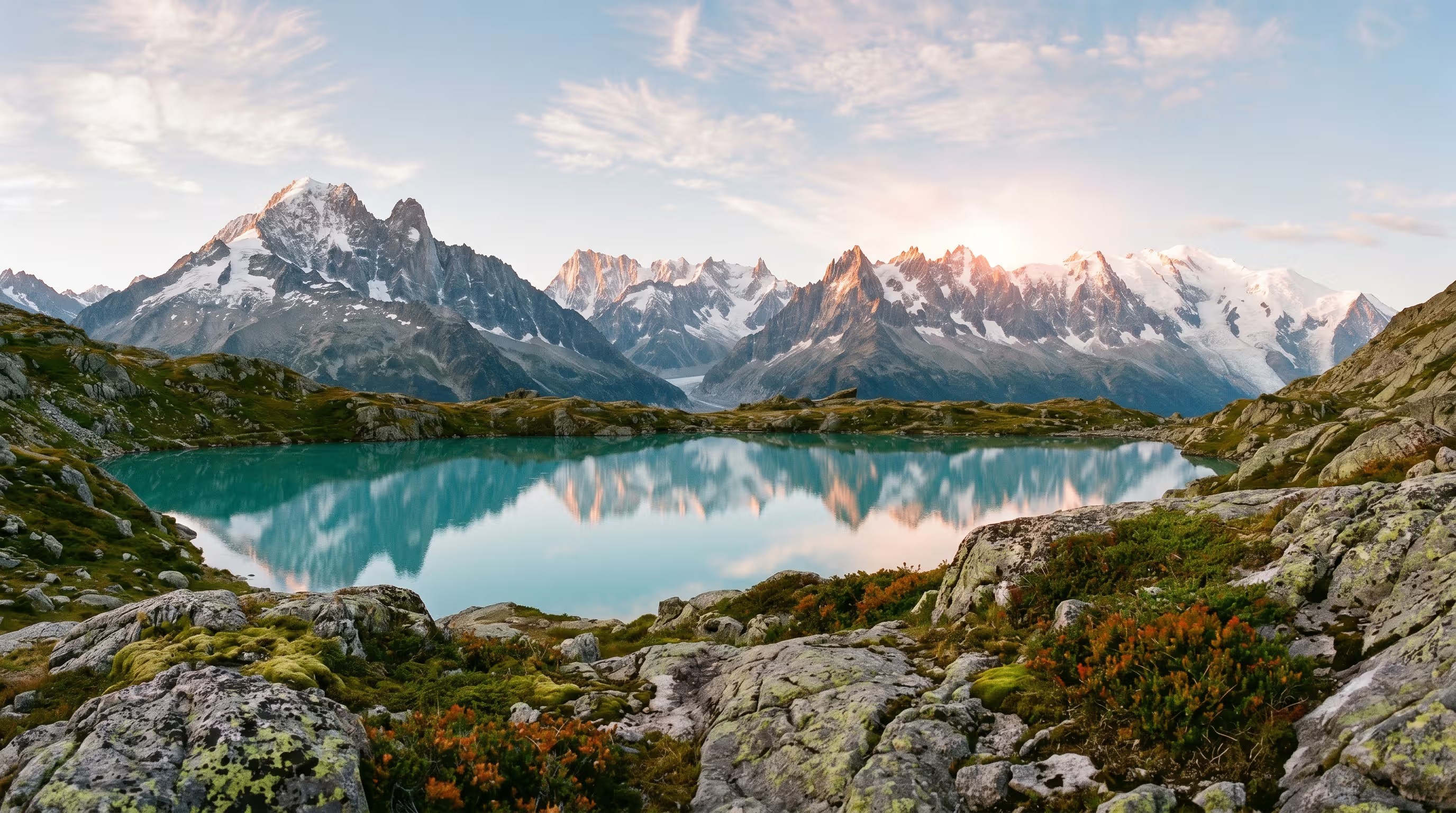
For centuries, artists have used the natural world as a canvas to project their internal emotional geographies. A turbulent sea could represent a troubled mind, while a sunlit valley might signify peace. Today, this tradition is being expanded by a new technological frontier: AI landscapes. These algorithmically generated vistas, created through generative AI, are more than just digital novelties; they are potent mediums for communicating a vast spectrum of human emotions, whether or not human figures are present.
The Emotional Power of Landscapes
Art has always been a primary channel for human expression, and landscape art is deeply connected to emotion. Artists have historically used their work to convey feelings where every choice of color and composition reflects their emotional state. A calm sunset can bring a feeling of peace, while a rugged, stormy mountain might evoke awe and fear. These scenes tap into our innate connection with nature, allowing us to project our own feelings onto the canvas.
Specific elements within a landscape are traditionally used to stir distinct feelings. The vastness of a Romanticist landscape, often featuring a tiny human figure, can evoke the sublime a mix of terror and beauty that makes us feel small yet part of something immense. Elements like color, light, and composition are carefully chosen to support the emotional message. Bright sunlight might suggest happiness, while dark, moody skies can create a sense of foreboding. Effective text-to-image prompting can specify these atmospheric conditions to achieve a desired mood.
The Human Figure as a Narrative Anchor
Adding human figures to a landscape, whether in traditional art or through image generation, introduces a powerful narrative layer and a more direct emotional link. A solitary figure on a misty lake immediately tells a story of solitude. In contrast, a busy market in rolling hills suggests community and life. These figures act as focal points, turning a static view into a lived-in experience.
In AI-generated imagery, the depiction of people can either reinforce or contrast with the environment's mood. A joyful figure in a vibrant, sunlit field amplifies a feeling of elation. Conversely, placing a somber figure in that same field can create a powerful juxtaposition, suggesting themes of isolation amidst beauty. The body language and posture of these figures are crucial, as a hunched-over form can signal sadness, while an open stance might convey confidence.
How AI Constructs Emotional Worlds
While a human artist's work is shaped by personal experience, AI operates on learned patterns from vast datasets of images and text. This data-driven method is surprisingly effective at creating emotionally resonant art. Through machine learning, AI can recognize that certain colors, like red, are often tied to passion or anger, while blue can signify calm or sadness. Similarly, it learns that sharp, aggressive lines can feel more energetic than soft, curving ones.
This capability allows AI, particularly diffusion models, to generate new art that evokes feelings similar to its training data. The dialogue between the user and the AI through prompt engineering is key. Descriptive prompts can guide the AI to generate landscapes that capture nuanced emotional states, specifying details like muted color palettes, soft lighting, and weather conditions to achieve the desired effect.
A New Spectrum of Digital Expression
The applications for AI-generated emotional landscapes are broad and growing. In digital art, creators are exploring new aesthetic territories. Beyond static images, these landscapes are being integrated into immersive media like virtual reality, creating environments that can adapt to a user's emotional state. In therapeutic settings, exploring these "emotional landscapes" can be a tool for patients to process feelings, similar to traditional art therapy. This technology is not replacing human creativity but augmenting it, providing a new canvas for expressing the complexities of our inner lives.

Ready to transform your AI into a genius, all for Free?
Create your prompt. Writing it in your voice and style.
Click the Prompt Rocket button.
Receive your Better Prompt in seconds.
Choose your favorite AI model and click to share.
Summary of AI Image Landscapes
AI-generated image landscapes are a powerful medium for visually communicating emotions. By analyzing vast datasets, AI learns to apply artistic principles to create new scenes that evoke specific feelings. The emotional impact is achieved through the manipulation of visual elements. For instance, AI uses color theory, associating warm palettes with joy and cool tones with sadness. The composition also plays a key role; serene, horizontal lines can suggest calmness, while sharp, diagonal lines might create tension. AI can also generate landscapes in the style of famous artists, imbuing the image with a similar emotional tone.
The inclusion of human figures adds another layer of emotional depth. While artificial intelligence does not have emotions, it can simulate them by depicting human figures with specific postures and expressions. A hunched figure can signal sadness, while a character looking over a vast landscape can convey freedom. This ability to generate expressive characters within a complementary landscape allows for direct storytelling, where the environment and its inhabitants work together to communicate a unified emotional message. This technology is being explored for various applications, from creating personalized art for mental well-being to generating dynamic environments in video games and movies.
Communicating Emotion Through Landscape Elements
| Element of Depiction | How it Communicates Emotion | Examples of Emotions/Internal States Conveyed |
|---|---|---|
| Color Palette | Utilizes psychological associations of color to set the emotional tone. | Warm/vibrant tones (joy, nostalgia), cool/muted tones (sadness, tranquility). |
| Composition and Light | Arrangement of elements and use of light to guide the viewer's emotional journey. | Soft, horizontal lines (calm), sharp diagonal lines (chaos), dramatic lighting (awe, mystery). |
| Artistic Style | Mimics the styles of famous artists or art movements to evoke associated emotions. | Image abstraction (dreamlike), Realism (grounded), Romanticism (awe, solitude). |
Communicating Emotion Through Human Inhabitants
| Element of Depiction | How it Communicates Emotion | Examples of Emotions/Internal States Conveyed |
|---|---|---|
| Facial Expression | Analyzes and generates facial cues to directly portray emotional states. | Joy, sadness, anger, fear, surprise, contentment. |
| Body Language and Posture | Depicts physical stances and gestures that signal internal states. | Slumped posture (sadness, exhaustion), open stance (confidence), reaching out (longing). |
| Interaction with Landscape | The relationship between the figure and their environment creates a narrative. | A small figure in a vast landscape (loneliness, awe), a figure interacting with nature (peace). |