
A new frontier in creative exploration is rapidly unfolding, powered by generative AI. AI image-to-image prototyping, a process that uses AI to transform existing images and sketches into a multitude of new visual concepts, is revolutionizing the way ideas are born and developed. Unlike text-to-image generation which creates visuals from scratch based on a prompt, image-to-image AI uses a source image as a structural guide or reference image. This technology, built on models like GANs and diffusion models, is not just about generating images; it's a dynamic tool that allows creators to iterate, refine, and visualize concepts with unprecedented speed and flexibility. From the initial spark of an idea to the final polished product, AI image-to-image prototyping is becoming an indispensable ally across academic, educational, commercial, marketing, advertising, and communication domains, fundamentally enhancing creative processes and outcomes.
The core of AI image-to-image technology lies in its ability to take a visual input, be it a rough sketch, a basic 3D model, or an existing photograph and apply a new style, context, or set of attributes based on a user's prompt. This allows for rapid and extensive exploration of creative directions without the time and resource-intensive manual labor traditionally required. The implications of this are profound, offering a powerful catalyst for innovation and a more fluid, iterative refinement of the creation process.
A New Paradigm in Commercial and Creative Fields
In the competitive worlds of commerce, marketing, and advertising, speed and relevance are paramount. AI image-to-image prototyping dramatically accelerates the conceptual phase. Designers can take a simple sketch and instantly generate photorealistic renderings in various materials, colors, and settings, a process that is invaluable for interior design prompts and product visualization. This rapid visualization makes it easier to align with clients and teams from the outset. Marketers leverage this by generating diverse ad creatives from a single product image to appeal to different demographics, streamlining A/B testing and leading to more effective, data-driven campaigns.
| Commercial & Creative Applications | Key Benefits |
|---|---|
| Product Design | Accelerates concept iteration by generating realistic product variations from sketches, reducing the need for manual 3D modeling. |
| Marketing | Creates diverse lifestyle and contextual images from a single product shot to target various audience segments. |
| Advertising | Enables rapid A/B testing of visual concepts and streamlines the creation of storyboards and campaign mock-ups. |
Enhancing Visual Communication and Storytelling
In the realm of communication, the power of a compelling visual cannot be overstated. AI image-to-image prototyping is transforming visual storytelling by making it easier to create rich, narrative-driven content. Communication professionals can develop entire storyboards from simple sketches, allowing them to visualize a campaign's flow. This technology also ensures greater consistency in visual branding. By training an AI model on a brand's specific visual identity, organizations can ensure all generated images, from social media posts to website banners, maintain a cohesive look and feel, which is a core part of creative prompting.
| Communication Applications | Key Benefits |
|---|---|
| Visual Storytelling | Develops narrative sequences and storyboards from single images or sketches to visualize a story's progression. |
| Brand Consistency | Maintains a cohesive visual identity across all communication channels by applying a consistent, trained style. |
| Stakeholder Alignment | Creates tangible visual prototypes from abstract ideas, ensuring clearer understanding and faster decision-making among teams. |
Transforming Academic and Educational Fields
The academic and educational sectors are harnessing AI image-to-image prototyping to make learning more engaging and research more accessible. Educators can create custom visual aids and diagrams to explain complex concepts, moving beyond generic stock photos. For instance, a biology teacher could sketch a cell and use AI to generate detailed, visually appealing versions. In academic research, AI helps create tailored stimuli for experiments, such as generating realistic faces with subtle variations for psychology studies, allowing for more controlled and nuanced research designs.
| Academic & Educational Applications | Key Benefits |
|---|---|
| Educational Materials | Generates custom, high-quality illustrations and diagrams to make complex topics more accessible and engaging for students. |
| Academic Research | Aids in visualizing complex data and creating specific visual stimuli for experiments, enhancing the clarity of scholarly communication. |
| Fostering Creativity | Provides visual prompts for assignments and helps students visualize abstract concepts or historical events. |
The Future of Creativity
The rise of AI image-to-image prototyping does not signal the end of human creativity; rather, it marks the beginning of a new collaborative era, creating a synergistic bionic mind. These tools act as a powerful partner, augmenting the creative process and allowing professionals to focus on higher-level ideation and strategy. The ability to rapidly visualize and iterate on ideas frees creators from the drudgery of manual production, enabling them to explore more possibilities and push the boundaries of their imagination. As this technology continues to evolve, its integration across creative domains will only deepen, promising to unlock new levels of innovation.
Ready to transform your AI into a genius, all for Free?
Create your prompt. Writing it in your voice and style.
Click the Prompt Rocket button.
Receive your Better Prompt in seconds.
Choose your favorite AI model and click to share.
Summary of AI Image-to-Image Prototyping
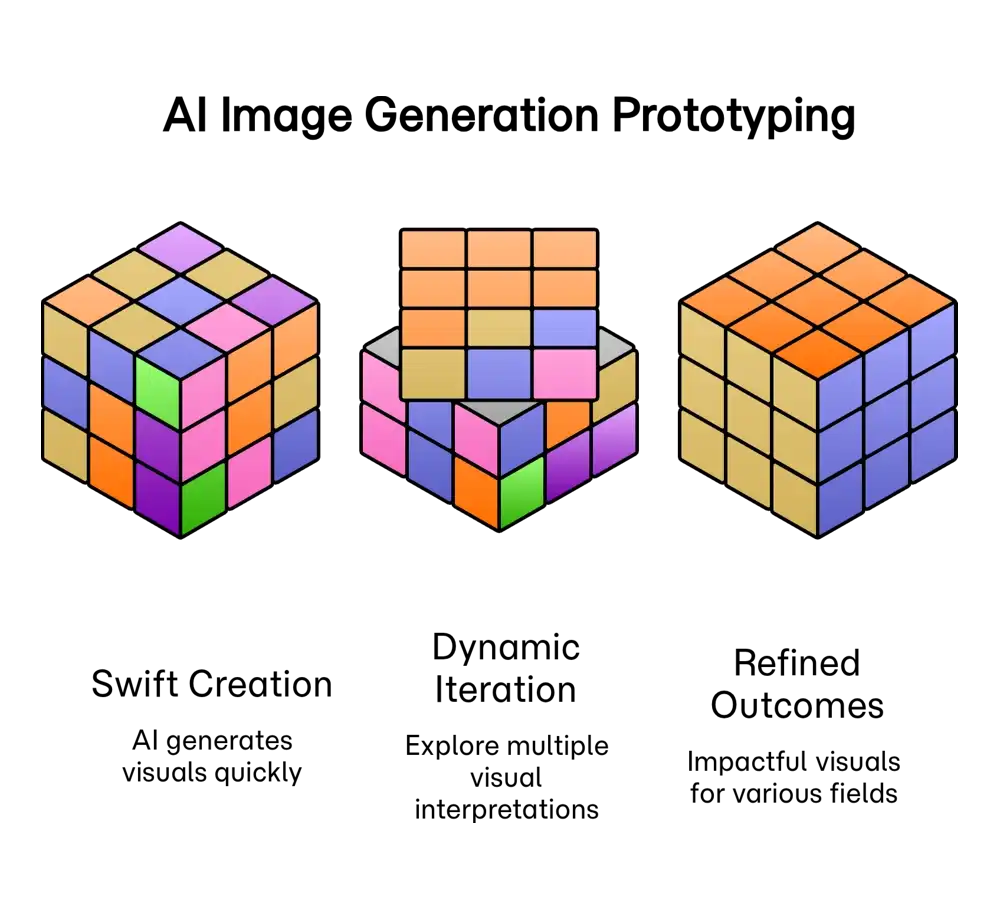
The rapid evolution of Artificial Intelligence (AI) image generation is fundamentally transforming the landscape of creative and professional fields. By enabling the swift creation of visual prototypes from existing images, AI empowers academics, educators, marketers, and communicators to bring their ideas to life with unprecedented speed and flexibility. This technology significantly shortens the ideation-to-visualization pipeline, allowing for quick testing and iterative refinement of concepts that were once time-consuming to produce. The ability to generate a multitude of visual interpretations from a source image and text prompts fosters a more dynamic and experimental creative process, leading to more impactful outcomes. The democratization of high-quality visual content creation is not only streamlining workflows but also breaking down barriers to innovation.
Frequently Asked Questions
What is AI image-to-image generation?
What is the difference between inpainting and outpainting?
How can I maintain a consistent character or style across multiple images?
Can AI improve the quality of my low-resolution photos?
What is ControlNet and how does it relate to image-to-image generation?
What are some practical applications of image-to-image AI?
- Interior Design: Visualizing different styles in an existing room.
- Product Mockups: Placing a product into various scenes and styles for marketing.
- Photo Editing: Removing unwanted objects, restoring old photos, or changing the style.
- Art and Creativity: Transforming sketches into finished artworks or applying the style of one artist to another's image.
- Prototyping: Quickly creating visual concepts for products and designs.