
In an era where our lives are increasingly lived online, the concept of self-representation has undergone a profound evolution. The way we present ourselves is no longer confined to face-to-face interactions; it now extends to a vast digital landscape of social media profiles, avatars, and online communities. This digital persona, or bionic mind, is a curated version of ourselves, shaped by the tools and platforms we use. The journey of our digital identity began with simple, pixelated icons in early chat forums and has evolved into the hyper-realistic, interactive avatars of today. This shift highlights a fundamental change in how we form our sense of self, influenced by both our own choices and the algorithms that govern these digital spaces.
The Dialogue with the Digital Self
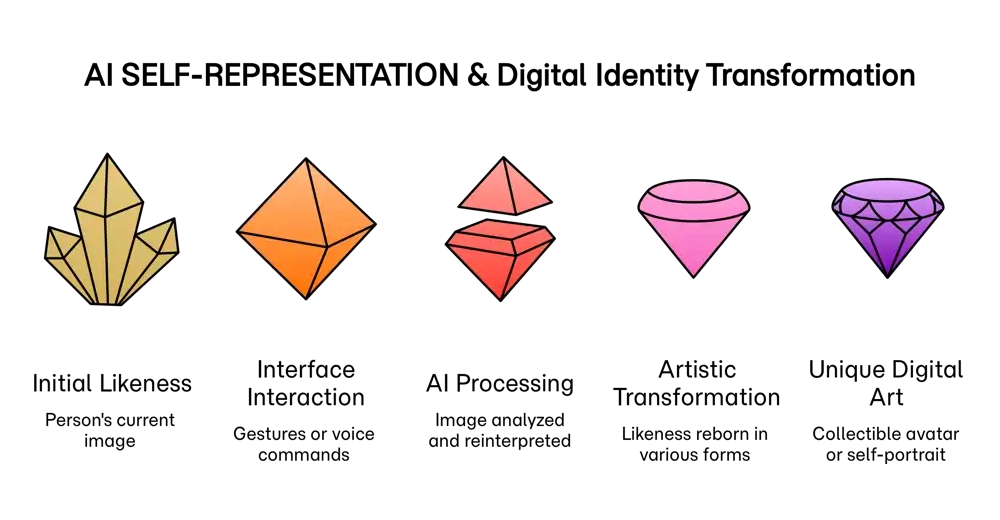
Imagine standing before a sleek, minimalist console, gesturing to conduct a symphony of light and data. On a shimmering, transparent screen, your image is captured and becomes a canvas for a creative partner: a generative AI. This futuristic interface allows for a deep exploration of identity. With a simple motion, the AI, trained on vast datasets of art and culture, reinterprets your digital twin. Your likeness could be rendered as a fierce anime hero or a meticulously detailed action figure cast in virtual chrome. These are not just filters but unique co-creations, blending your core identity with the AI's artistic vision. This process is a powerful form of self-expression, challenging traditional ideas of a single, static identity and allowing for a playful yet profound journey of self-discovery.
Artistic Transformation and Personal Identity
The ability to create art with AI redefines the role of the individual in the creative process. You become a collaborator, guiding the AI's immense power to produce something entirely new. This partnership between human intention and machine learning can lead to unexpected and surprising results, pushing the boundaries of creativity. The focus shifts from technical skill to conceptual vision, empowering anyone to become an artist of their own identity. This technology offers a new form of self-expression that is both playful and profound. AI portrait generators can create a wide array of choosing a style prompt, from realism prompt headshots to fantastical comic book characters, allowing individuals to explore multifaceted versions of themselves. However, this algorithmic influence also raises questions about authenticity and agency, as our self-perception becomes co-constructed by the technology we use.
Digital Avatars as Unique Collectibles
In the age of Web3 and the metaverse, these stylized self-portraits are gaining new significance as unique digital collectibles. Through blockchain technology, each AI-generated avatar can be minted as a non-fungible token (NFT), providing a verifiable and immutable record of ownership. This transforms a personal creation into a valuable and tradable asset. Owning an NFT doesn't typically grant copyright to the underlying art but proves ownership of that specific tokenized version. Platforms are emerging that function as prompt marketplaces, allowing users to create, own, and sell their digital likenesses. This has major implications for digital economies, where a unique avatar can grant access to exclusive communities or serve as a form of personal branding. As our lives move further online, the ability to securely own and control our professional touch ups becomes paramount, and blockchain offers a decentralized solution.
The Future is a Hall of Mirrors
As we continue to navigate the digital frontier, the ways we represent ourselves will become more sophisticated and integral to our sense of self. The futuristic scene of a person sculpting their identity with an AI is a powerful metaphor for the era we are entering. It is a time of artistic transformation, where the lines between the real and the virtual are becoming beautifully and irrevocably blurred. This continuous dialogue with our digital selves allows us to explore the infinite potential of who we are in the ever-expanding digital universe. However, it's crucial to remain aware of the psychological impacts, as the curated perfection of online personas can fuel social comparison and affect self-esteem.
Ready to transform your AI into a genius, all for Free?
Create your prompt. Writing it in your voice and style.
Click the Prompt Rocket button.
Receive your Better Prompt in seconds.
Choose your favorite AI model and click to share.
Summary of Self-Representation
AI-powered photo editing prompt offers a transformative way for individuals to visually manifest their digital representation. In the near future, a person could interact with a holographic interface, a futuristic hub that generates stylized self-portraits. With a few gestures, their likeness is reborn in various forms through a process of prompt engineering. This allows for an exploration of self, reflecting one's identity through different artistic lenses, from the heroic silhouette of an action figure to the expressive features of an anime character. The AI reinterprets the individual's essence into a new, collectible form, creating a deeply personal piece of digital art for virtual spaces.
| Form | Description | Themes Evoked |
|---|---|---|
| Anime Character | A 2D stylized portrait with large expressive eyes and unique hair, typical of Japanese animation. | Youthfulness, emotional expression, fantasy, and alternate realities. |
| Video Game Avatar | A customizable digital representation for use in virtual worlds, with selectable gear and abilities. | Adventure, skill, community, and immersive identity. |
| Cartoon Character | A simplified and often humorous depiction with exaggerated features and bold outlines. | Humor, lightheartedness, simplicity, and a playful persona. |
| Form | Description | Themes Evoked |
|---|---|---|
| Action Figure | A 3D-rendered, articulated version of the self, often with heroic proportions. | Heroism, strength, empowerment, and childhood nostalgia. |
| Renaissance Portrait | The individual's face is rendered in the style of classical oil paintings, with period-appropriate clothing. | Timelessness, elegance, artistry, and historical connection. |