The Dream-Weaving Machine: How AI is Reshaping Our Connection to the Past
A hazy, dreamlike filter has descended upon our collective cultural memory, casting the recent past in a warm, pixelated glow. This phenomenon is being actively shaped and accelerated by a powerful new force: generative AI. AI image generators are becoming adept at not just recreating, but re-imagining the iconic aesthetics of the 1980s, 1990s, and early 2000s. These "Nostalgic Decades," filtered through the lens of AI, are inspiring a broad spectrum of human activity, from our hobbies and social lives to the stories we tell and the art we create, often with a surreal quality that feels both familiar and uncannily new.
At the heart of this trend is the ability of AI to tap into a collective visual consciousness. With a simple text-to-image prompt like "a 1980s suburban street on a summer evening" or "a Y2K-era shopping mall," AI can generate endless variations of scenes that feel deeply personal, even if they never actually occurred. These images often possess a "hazy surrealism," where individual elements are recognizable, but their combination feels slightly off. This mirrors the way memory itself works not as a perfect replay, but as a fallible and emotional reconstruction. This dreamlike quality is a hallmark of some AI art, which can struggle with perfect realism, sometimes resulting in visuals that verge on the uncanny valley.
A Playground of Pastimes: Hobbies and Leisure Reimagined
The iconic imagery of these decades, amplified by AI's creative interpretations, is breathing new life into a variety of hobbies. The resurgence of "retro" is no longer confined to niche groups; it's a mainstream movement. The vibrant, neon-soaked vintage aesthetics of the 1980s, for example, are fueling a renewed interest in arcade gaming and themed parties that physically manifest the nostalgic atmosphere captured in AI-generated art. People are using AI to visualize everything from retro-futuristic cityscapes to classic video game scenes.
The Y2K aesthetic of the late 90s and early 2000s, with its fusion of technology and pop culture, has led to a revival in fashion and related hobbies. Trends like low-rise jeans and vibrant graphic tees are making a comeback, driven by a generation re-discovering the era through social media. This has also spurred an interest in analog technologies as a form of "digital detox." The return of vinyl records and cassette tapes can be seen as a desire for more tangible experiences, a sentiment often evoked in the romanticized, pre-social media imagery of these past decades.
Socializing in the Echoes of the Past
The way we interact socially is also being colored by this curated nostalgia. Social media platforms are awash with retro filters that mimic the look of old film and fashion trends that bring back past styles. These trends create a sense of community and shared identity, as users bond over a collective, often idealized, memory of the past. Themed events, from retro arcade nights to 90s-themed dance parties, provide a physical space for these online communities to connect, fostering new social connections through a shared cultural language. This is a key part of modern representation and digital identity.
Documenting the Dream: Non-Fiction and Artistic Exploration
The current fascination with these decades has led to a boom in non-fiction explorations. A plethora of documentaries, books, and articles now delve into the pop culture and social trends of the 1980s, 90s, and early 2000s. This renewed journalistic interest is, in part, a response to a public hungry for a deeper understanding of the eras so heavily romanticized in popular culture and online. AI's role in shaping this cultural memory is a topic of growing discussion.
Artistically, the influence of these decades is undeniable. Contemporary artists are drawing inspiration from the bold colors and early digital graphics of the 80s and 90s. Aesthetic genres like Vaporwave and Synthwave, which are heavily influenced by the visual and auditory styles of the 80s and 90s, further demonstrate the enduring appeal of these past decades. These genres often use symbolic imagery to combine retro visuals with a critique of consumer culture, creating a layered and often surreal experience.
Fictional Worlds Steeped in Yesterday
Fictional narratives in film and television are perhaps the most visible manifestation of this nostalgic wave. The aesthetics of the 1980s have become a powerful tool for filmmakers, with shows like "Stranger Things" building entire worlds around the decade's iconic imagery. The use of synth-heavy soundtracks and neon lighting are hallmarks of 80s cinema being adopted by modern creators. AI is increasingly used in the business innovation prompts phase of film production to generate concept art for these retro-inspired projects.
Similarly, the Y2K aesthetic is having a major moment, with its blend of technological optimism and bold fashion choices. Movies and shows are increasingly featuring the visual language of the late 90s and early 2000s, from fashion to early internet technology. These narratives tap into the nostalgia of those who lived through the era and offer a unique visual palette for storytelling that resonates with younger audiences. The aesthetics often evoke a sense of a future that never quite was, a retro-futurism that feels both charming and poignant. Crafting the right nostalgic scenarios in a prompt is key to capturing this feeling.
In conclusion, the nostalgic pull of the 1980s, 1990s, and early 2000s is more than a passing trend. It's a dynamic cultural phenomenon, powerfully amplified by the dream-weaving capabilities of AI. By generating idealized and often surreal interpretations of our recent past, AI is not only helping to shape our collective memory but is also actively inspiring the way we live, create, and connect.
Ready to transform your AI into a genius, all for Free?
Create your prompt. Writing it in your voice and style.
Click the Prompt Rocket button.
Receive your Better Prompt in seconds.
Choose your favorite AI model and click to share.
Summary of AI Nostalgic Decades
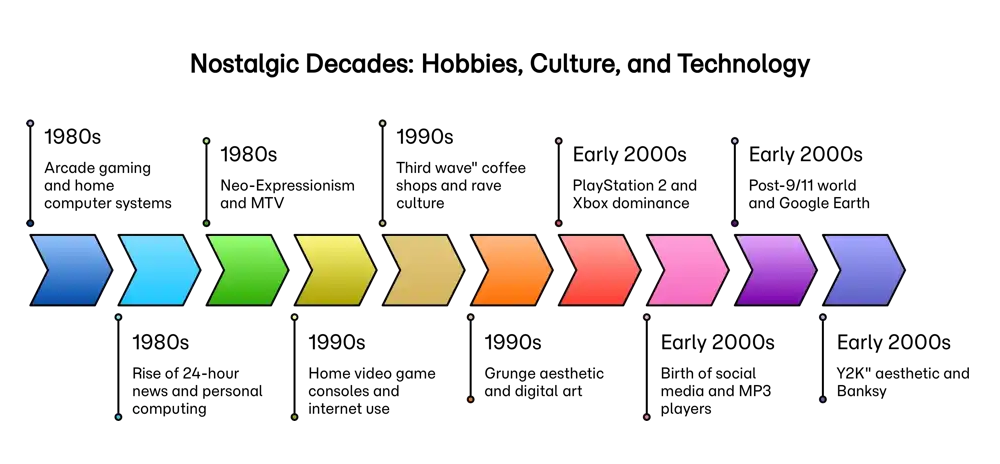
The distinct aesthetics of the 1980s, 1990s, and early 2000s serve as a powerful muse for contemporary culture, infusing a dreamlike sense of nostalgia into everything from personal hobbies to artistic creations. The '80s, with its vibrant neon glow and synth-pop soundtracks, inspires a retro-futuristic fantasy. This is contrasted by the '90s, which offered a grittier feel through grunge music and the early days of the public internet. The early 2000s, or the "Y2K" era, built on this with a unique blend of technological optimism and pop-centric glamour. Collectively, these decades provide a rich visual and cultural vocabulary that is endlessly reinterpreted in fictional narratives and artistic works, allowing creators and consumers to revisit and reimagine the past through artificial intelligence.
| Key Aesthetics | Cultural Touchstones | Common AI Interpretations |
|---|---|---|
| Neon lights (pinks, blues, purples), chrome accents, geometric patterns (Memphis Design), early pixel art, and synthwave-inspired landscapes. | Arcade games, VCRs, Walkman cassette players, blockbuster films like "Blade Runner," the launch of MTV, and yuppie culture. | Dreamlike suburban streets at sunset, neon-drenched cityscapes with retro-futuristic cars, portraits with big hair and bold fashion, and abstract synthwave grids. |
| Key Aesthetics | Cultural Touchstones | Common AI Interpretations |
|---|---|---|
| Grunge fashion (flannel, baggy jeans), rave culture flyers, raw and grainy photography, early web design (pixelated graphics, simple layouts), and a more subdued color palette compared to the 80s. | Home video game consoles (SNES, PlayStation), dial-up internet, Beanie Babies, independent cinema, and the rise of hip-hop and grunge music. | Nostalgic teenage bedrooms with band posters, grainy photos of friends at a roller rink, collages of iconic 90s imagery (cassette tapes, boomboxes), and early cyberpunk cityscapes. |
| Key Aesthetics | Cultural Touchstones | Common AI Interpretations |
|---|---|---|
| A mix of futuristic and pop elements: metallics, holographic/iridescent textures, bright colors, "blob-like" shapes, and translucent plastics (like the iMac G3). | The rise of social media (Friendster, MySpace), MP3 players like the iPod, reality TV, flip phones, and fantasy film epics like "The Lord of the Rings." | Futuristic tech interfaces with holographic displays, digital fashion illustrations, portraits with glossy lips and butterfly clips, and sticker-style art with bubbly accents. |