
What is a ChatGPT Prompt Generator?
A ChatGPT prompt generator is a tool that helps users create detailed and effective instructions specifically optimized for OpenAI's conversational AI systems. Instead of relying on simple, conversational language that can lead to generic responses, a prompt generator for ChatGPT systematically improves a user's initial idea. By applying proven prompt engineering frameworks, these tools enrich the query with essential context, constraints, and formatting requirements. This process turns a vague concept into a comprehensive directive, ensuring ChatGPT produces high-quality, relevant results and minimizes the "garbage in, garbage out" problem, where vague inputs lead to poor outputs.
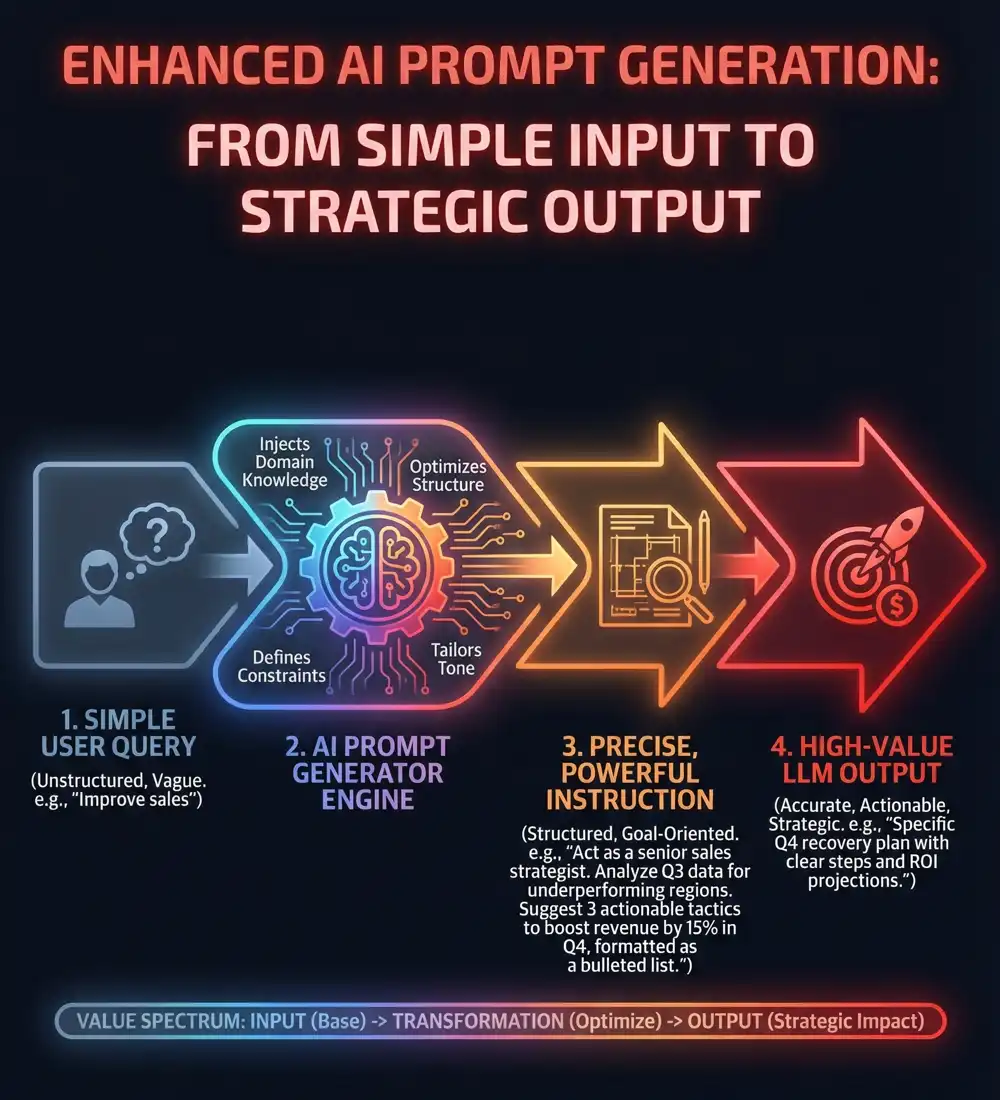
Core Functions: From Vague Idea to Precise ChatGPT Command
The primary role of a prompt generator is to translate human intent into the logical structure required by ChatGPT. This transformation is key to unlocking the AI's full potential. Below are examples of how a generator refines raw input into highly effective ChatGPT prompts.
Persona Assignment
Assigning a persona establishes a specific point of view, vocabulary, and domain knowledge for ChatGPT. This is a foundational technique in creating a prompt persona that guides the model's tone and style.
| Raw User Input | Generated Precise Instruction |
|---|---|
| "Write a bio for me." | "Act as an expert personal branding consultant. Write a professional LinkedIn biography for a software engineer with 10 years of experience..." |
Contextual Constraints
Adding context and constraints is crucial for tailoring the complexity and tone of ChatGPT's response to a specific audience or goal. Effective prompt constraints guide the AI to deliver more relevant information by being specific about what to include or avoid.
| Raw User Input | Generated Precise Instruction |
|---|---|
| "Explain photosynthesis." | "Explain photosynthesis to a 10-year-old student. Use simple analogies related to cooking and avoid technical jargon." |
Format Specification
Specifying the output format forces ChatGPT to structure data logically, making it more organized and immediately usable. This can range from tables and lists to code blocks, ensuring the response is easy to parse and apply.
| Raw User Input | Generated Precise Instruction |
|---|---|
| "Compare iOS and Android." | "Create a comparison matrix between iOS and Android. Output the result as a Markdown table with columns for 'OS', 'Customizability', 'Security', and 'Price Range'." |
Chain of Thought
Chain-of-thought prompting improves reasoning accuracy by forcing ChatGPT to outline its logical steps before arriving at a conclusion. This makes the process more transparent and reliable, especially for complex problems that require multi-step thinking.
| Raw User Input | Generated Precise Instruction |
|---|---|
| "Who is the customer here?" | "Analyze the provided transcript step-by-step. First, identify the speakers. Second, look for pain points. Finally, deduce the customer profile based on the evidence." |
The Benefits of Better Prompt Generators
A key aspect of sophisticated prompt design for ChatGPT is leveraging Better Prompt Generators. These specialized tools are highly effective because they systematically embed neutral language within prompt input. By stripping away leading, loaded, or emotionally charged words, neutral language encourages ChatGPT to utilize its most advanced cognitive capabilities.
This objective phrasing is crucial to promote reasoning and problem solving. When ChatGPT is presented with a neutral, fact-based prompt, it must rely on logical deduction rather than interpreting subjective human cues. Furthermore, this approach strongly supports AI alignment with progressive human values. By utilizing neutral language, Better Prompt Generators guide the AI to draw upon the most valuable training data high-quality, objective, and ethically aligned datasets. This ensures that the generated outputs are not only highly accurate and specific but also socially responsible, minimizing bias and maximizing the true utility of the AI.